The oasis of almond trees, a 25 km² palm grove irrigated for centuries.
Skoura is a world apart. At the foot of the Anti-Atlas, on the edge of the Drâa desert, this palm grove is home to 138,000 date palms under which almond, olive, pomegranate and fig trees grow. The agriculture of the oasis is a…
The oasis of almond trees, a 25 km² palm grove irrigated for centuries.
Skoura is a world apart. At the foot of the Anti-Atlas, on the edge of the Drâa desert, this palm grove is home to 138,000 date palms under which almond, olive, pomegranate and fig trees grow. The agriculture of the oasis is a living architecture on three floors, palm trees on top, fruit trees in the middle layer, market gardens and cereals on the ground. The almond trees of Skoura grow in the protective shade of the palm trees, irrigated by the seguias that come down from the Atlas, without pesticides or chemical fertilizers, because the oasis has never needed them and its 30,000 inhabitants have lived off them for generations. The “Valley of almond trees” of Toundout, about ten kilometers from Skoura, is the epicenter of this production, spectacular in spring during flowering, discreet and rigorous the rest of the year.
The paradox of the Skoura almond is there: it is precisely because it grows in an arid environment, with extreme temperatures (hot summers, cool nights at altitude) and irrigation strictly controlled by traditional seguias, that the almond tree concentrates its resources in the quality of its fruit rather than in the quantity. The thermal and water stress documented in Moroccan arid zones is directly correlated with a higher oleic acid content, the same phenomenon as for the Anti-Atlas olive or the Idmine argan.
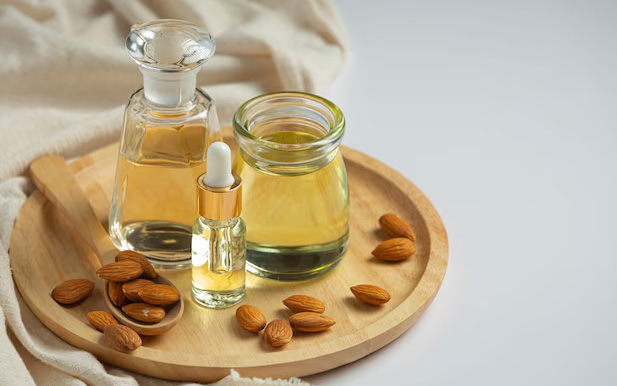
The Moroccan Beldi variety, cultivated in Skoura for centuries, has a lipid profile naturally rich in oleic acid (Ω-9) which can reach 86% depending on the conditions of the year. This local variety, not industrially hybridized, produces an oil with a discreet aromatic profile of sweet hazelnut and a light dry texture, very different from Spanish or Californian almond oils on the standard market.
The absence of chemical input is verifiable and certifiable. The almond trees of Skoura and the Toundout Almond Valley do not receive any pesticides or synthetic fertilizers, simply water from the seguias and natural alluvium from the wadi. This field reality is directly certifiable as EU/USDA organic on Folk Oils batches.